Technological Advancements and Design Features
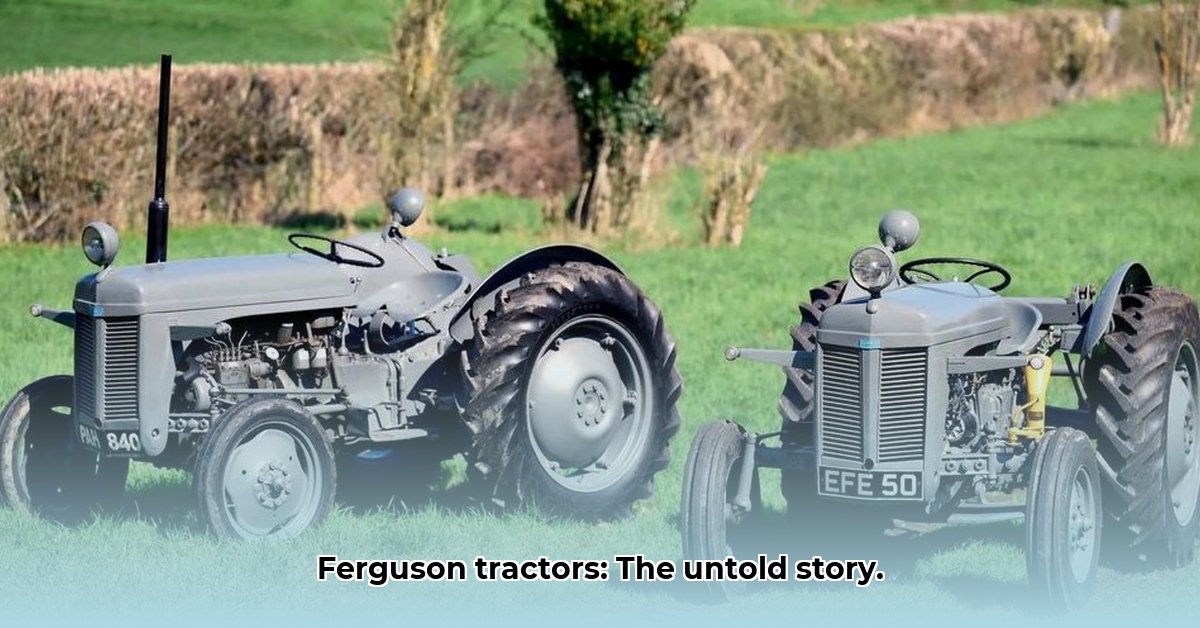
The Ferguson TO-20 and TO-30 tractors, manufactured between 1948 and 1954, significantly advanced agricultural technology. These models, with approximately 60,000 TO-20s and 80,000 TO-30s produced, represented a substantial leap forward from earlier designs. Key improvements included a more powerful four-cylinder gasoline engine, offering increased horsepower compared to previous models, enabling farmers to cultivate larger areas and utilize heavier implements. The incorporation of a 540 RPM rear power take-off (PTO) (a system for powering external implements) dramatically expanded the versatility of the tractors, boosting overall productivity. This feature allowed for the connection of a wider variety of implements compared to older designs, thereby increasing efficiency on the farm. For more information on Ferguson tractors, visit the Ferguson Tractor website.
However, while advertised horsepower figures were impressive, independent testing sometimes revealed discrepancies. This inconsistency highlights the need for comprehensive performance evaluation in real-world conditions. The TO-30's unsynchronized four-speed transmission, while a cost-effective design, presented challenges in shifting gears, particularly in rough terrain. This deficiency negatively impacted the user experience and operator comfort. Moreover, limited data on fuel efficiency hinders a complete cost-benefit analysis relative to contemporaries. Some research indicates potentially lower than expected fuel economy might have influenced the tractors' long-term market share.
Design Analysis: Strengths and Weaknesses
The Ferguson TO tractors featured several innovative design elements amidst their limitations. The four-cylinder gasoline engine, while providing a power boost, required careful maintenance and often showed inconsistencies between advertised and actual horsepower. The 540 RPM PTO greatly enhanced the versatility of these tractors, but independent testing sometimes revealed slightly lower actual output than advertised, raising concerns about reliability. The open operator station, while typical for its time, lacked the safety and comfort features deemed standard in more modern designs. This increased operator exposure to the elements – sun, rain, and dust. The six-volt electrical system, though standard then, presented its own set of reliability challenges, with the Delco-Remy charging system requiring regular maintenance and being susceptible to problems. Maintenance manuals often highlighted the need for regular upkeep, suggesting that these tractors required diligent service to remain operational.
Market Impact and Long-Term Implications
The Ferguson TO-20 and TO-30 achieved notable market success, reflecting their appeal to farmers in need of increased power and efficiency. Their widespread adoption underscores their significant contribution to the history of agricultural technology. Despite their popularity, their market dominance gradually decreased due to the rise of more powerful and versatile tractors and their inherent design limitations. Although the TO series ultimately lost popularity, their influence on subsequent tractor designs is undeniable. They laid the foundation for many design elements and principles found in later, more advanced tractors.
Conclusion: A Legacy of Innovation
The Ferguson TO-20 and TO-30 tractors, while exhibiting certain limitations, represent a pivotal advancement in agricultural mechanization. Their design features, though improved upon in later models, left an enduring mark on farming technology. Their widespread adoption and influence on subsequent designs solidify their place in agricultural history, serving as a testament to the continuous evolution of farming technology. The challenges and successes of these tractors offer valuable lessons for appreciating the ongoing quest for greater efficiency and effectiveness in modern agricultural practices. Detailed records of their production and market performance remain important for researchers and historians who are working to create a more complete history of agricultural technologies.